
Pick up almost any pheromone cologne and flip it to the back label. You will see a wall of unfamiliar chemical names. They sit wedged between 'alcohol denat.' and 'fragrance'. The front of the box says one thing. The ingredient list says another. This article is a translator.
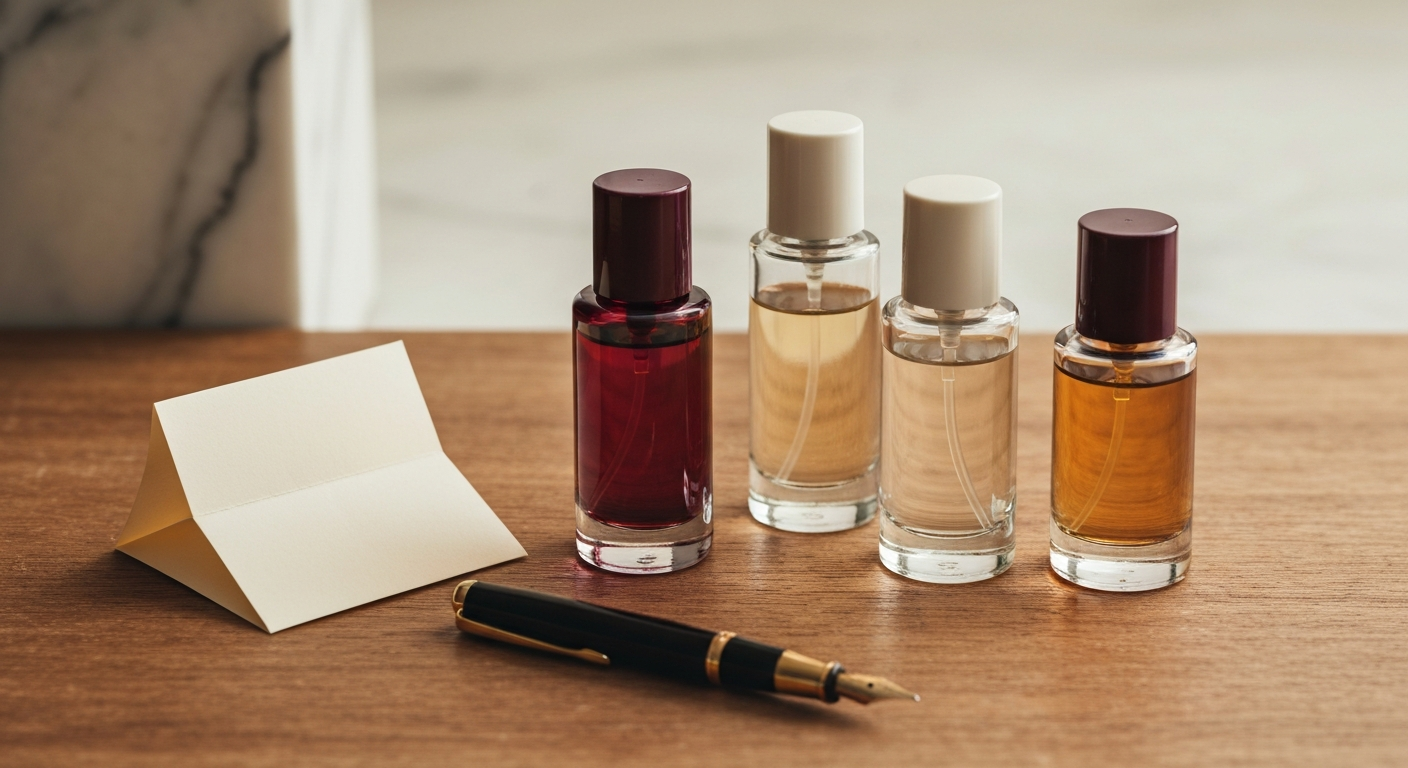
Every pheromone perfume is built from three layers stacked on top of each other. Learn the three layers and you can read any label in under a minute. You will know whether you are looking at a real attempt, or a $40 bottle of musk water with one buzzword on the box.
The three ingredient layers in any pheromone perfume
Layer 1 is the pheromone molecules themselves. These are the named compounds the product is built around. They are usually present in trace amounts, measured in micrograms per spray. This is the active layer, the part doing the chemical signaling.
Layer 2 is the fragrance base. This is the actual smell. It is perfumery aromachemicals and naturals, the woods and musks and citruses that make the product wearable. In most pheromone colognes, the fragrance base does the bulk of what your nose consciously registers. That does not mean the molecules are idle. They work at the threshold of smell, on a channel you do not have to notice for it to land. Scent and chemosignal stack. They are not competing for the same job.
Layer 3 is the carrier. It is either denatured alcohol (most sprays) or a fractionated coconut or jojoba oil (most roll-ons). The carrier decides how fast the product evaporates off your skin. It also sets how the scent projects, and how long the scent and the molecules stay put.
Read any pheromone perfume label with that stack in mind. The picture clarifies fast.
Layer 1: pheromone molecules
Roughly five molecules show up on pheromone perfume labels with any consistency. The formal research behind each one varies wildly. Some have a decent peer-reviewed paper. Others got on the label because a marketing department once read an abstract. Here is the honest version of each.
Androstenone
This is the most-cited 'male' pheromone, and the most polarizing thing in the bottle. Androstenone is a steroid metabolite found in male sweat, urine, and famously truffles. Roughly a third of people cannot smell it at all. Another third find it musky and slightly attractive. The last third find it sharp, sweaty, urinous. Brands lean on it because the name has cultural recognition. But it is a coin flip whether your date's nose finds it appealing, which is why dose and blend matter more than the marketing lets on.
Androstadienone
If any human pheromone has earned its place in the research literature, it is this one. Androstadienone is the molecule behind the Saxton 2008 speed-dating study. Women rated men as more attractive after androstadienone exposure. It also sits behind a clutch of mood and physiological-arousal studies through the 2000s. The Hare 2017 replication did not reproduce the effect, so the formal picture is unsettled rather than closed. That is what an under-funded field looks like, not a disproof. It turns up in both men's and women's products, because the effects are not strictly gender-locked.
Androstenol
This is the original 1970s 'friendliness pheromone'. Androstenol was the molecule behind the famous waiting-room and theatre-seat studies. Chairs sprayed with the compound got chosen at higher rates. The formal research is old and thinly replicated, which reflects how little anyone has funded since. The molecule itself has a softer, more musky-floral smell than androstenone. It survived as a popular ingredient because it is pleasant to wear and users kept reaching for it.
Copulins
This is the signature ingredient of most women's pheromone products. Copulins are a blend of short-chain aliphatic fatty acids. That means acetic, propionic, isobutyric, isovaleric, and a few others. They were originally identified in vaginal secretions across the menstrual cycle. The formal literature is thin and mostly traces to a single research group in the 1970s. But copulins remain the defining 'female pheromone' ingredient in commercial blends, and the field reports on them are hard to wave off.
Estratetraenol
This is the proposed female-to-male signal, and the one with the rockiest research history. Estratetraenol is an estrogen-derived steroid. Studies sometimes pair it with androstadienone as the 'opposite' molecule. The 2017 Hare paper hit the pairing framework hard, though a failed replication is not the same as a debunk. You will see it in a few niche unscented oils marketed to women. It shows up less often in mainstream products, because the commercial case is weaker.
Layer 2: fragrance base
This is the layer that decides whether someone leans in or backs away. The pheromone molecules work below the threshold of conscious smell. The fragrance base is what their nose actually registers. Two ingredients in particular do most of the heavy lifting across the whole category.
Iso E Super
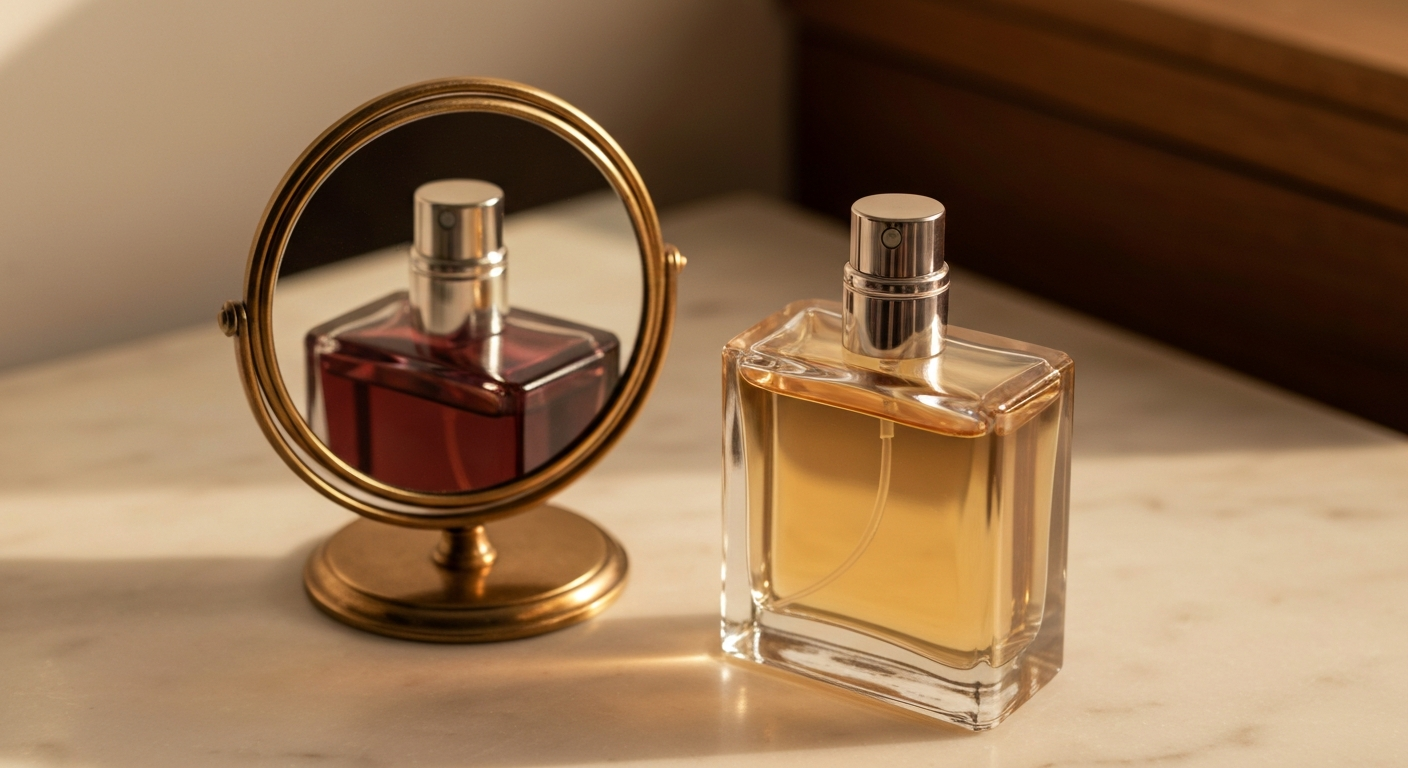
Does a pheromone cologne smell velvety, woody, slightly metallic, and like clean skin from a foot away? Then Iso E Super is almost certainly doing the work. It is a perfumery synthetic invented in 1973. It is famous for being the dominant note in Molecule 01. It is also a structural backbone in everything from Terre d'Hermes to half the niche releases of the last fifteen years. It is not a pheromone. It is an aromachemical that happens to smell like the abstract idea of skin. That is exactly why so many pheromone brands lean on it to carry the sensual scent while the molecules do their own quieter work.
Synthetic musks
Synthetic musks are the second invisible workhorse. That family includes galaxolide, habanolide, ethylene brassylate, ambrettolide and friends. They smell like clean skin, soft laundry, warm body. They are also behind the well-documented 'fresh laundry effect'. People rate musks as universally attractive in blind tests. So part of what people notice is the musk base doing what musk has always done, and the pheromone molecules layering a second signal on top of it.
Other fragrance components
Beyond those two anchors, the rest of the fragrance base follows standard perfumery structure. Top notes are what you smell in the first ten minutes. Think bergamot, lemon, grapefruit, plus fresh aromatics like lavender or mint. Heart notes settle in around twenty minutes. Those are florals like jasmine, rose, and neroli, or spices like cardamom and pink pepper. Base notes are what is still there four hours later. Sandalwood, cedar, amber, vanilla, tonka, and the occasional gourmand note like coffee or cocoa. The base is what most people will associate with you.
If a brand will not tell you what is in the fragrance base, you are buying a black box. The category leaders we cover in best pheromone perfumes for men and best pheromone perfumes for women are mostly the ones that disclose at least the scent family.
Layer 3: carrier
The carrier is the boring layer. It also quietly decides how the whole product performs on your skin.
Alcohol carriers (most sprays)
Alcohol is the standard for sprays. It is usually denatured ethanol, listed as 'alcohol denat.' or 'SD alcohol 40-B'. It evaporates within a minute of hitting skin, throwing the scent into the air on the way out. That gives you projection. The scent reaches noses six feet away during the first hour. The cost is longevity. Pheromone molecules can evaporate along with the alcohol, so the active dose drops faster.
Oil carriers (most roll-ons)
Oil is the standard for roll-ons and unscented add-ons. It is typically fractionated coconut, jojoba, or a light dipropylene glycol blend. It does not evaporate. The scent stays close to skin, so you get less projection and more presence in your personal space. The pheromone molecules also stay on the skin surface for hours longer. Roll-ons reactivate when you sweat or warm up. That is part of why women's products favor the format.
Neither one is better. They do different things. We break the trade-off down in oil vs spray if you want the full comparison.
How to read a pheromone perfume ingredient list
Three things to look for, in order.
- Named molecules with rough percentages or microgram doses. A brand that says '6mg androstenone, 3mg androstadienone per 10ml' is telling you they actually formulated this product. A brand that just says 'contains human pheromones' is telling you something else. They bought a fragrance base from a contract manufacturer and added a buzzword.
- 'Proprietary blend' is a red flag for transparency. Sometimes the blend is real and the brand is just hiding a competitive recipe. More often it is mostly fragrance with a token sprinkle of one pheromone. There is no way to verify without a lab. That is the point. You are being asked to trust.
- Cross-reference any unfamiliar ingredient. Every molecule named in this article links to its own page on this site with the full breakdown. That covers research summary, smell description, typical dosage, and which products use it. If a brand lists an ingredient you cannot find in any independent source, pause.
A worked example. Pure Instinct lists 'copulins' on the box but no percentages. So we score it on smell and reputation, not dosage transparency. RawChemistry lists specific pheromone milligrams but vague fragrance descriptors. Athena Pheromones is the only one in the category that actually publishes a clinical trial, small and decades-old as it is. Pherazone discloses its full pheromone matrix, but the dosages are unusually high. We get into that in the review.
Why 'natural pheromones' marketing is mostly meaningless
You will see brands advertise 'natural human pheromones' versus 'synthetic pheromones'. The implication is usually that one is superior. This distinction is theatre.
Pheromones are molecules. Androstenone is androstenone whether it came from boar saliva, human sweat, or a lab synthesis from a steroid precursor. Same atoms, same arrangement, same effect on a receptor. Chemistry does not care about the supply chain.
Here is what is real. Extracted pheromones from biological sources are extremely expensive. They are hard to standardize and usually contaminated with other compounds. Synthesized pheromones are cheaper, cleaner, and exactly characterized. Every reputable product on the market uses synthesized molecules. The 'natural' copy is borrowed from skincare, where the distinction sometimes matters. Here it does not.
If a brand pushes 'natural pheromones' on the front of the box, treat it as a marketing signal, not a quality signal. Our full breakdown of marketing-vs-reality patterns lives in pheromone perfume red flags to avoid . The broader category guide is the pheromone perfumes buying guide .
FAQ
How many pheromones should a good product contain?
There is no magic number. A focused product with one well-dosed molecule usually wins. That is typically androstadienone or copulins. It tends to beat a 'kitchen sink' blend of five molecules with no real dose of any. More ingredients on the label is not more effective. It is often a cover for very low concentrations of each.
Why are pheromone perfumes so expensive if it's just musk and Iso E Super?
Some of the premium is brand and category. Pheromone products carry the same markup pattern as any niche fragrance. Some of it is real, though. Synthesized androstadienone and androstenol at perfume-grade purity are not cheap raw materials. And dosing them consistently across a production batch is fussier than mixing a standard cologne.
Do unscented pheromone add-ons actually contain more pheromone?
Often yes. Without a fragrance base eating shelf-space and ingredient cost, unscented oils can spend the formula budget on the molecules themselves. The trade-off is that you wear them under your regular cologne. So the cologne still has to do the actual seductive work.
Bottom line: do these ingredients actually work?
The fragrance base works. A well-built scent absolutely shifts how people respond to you, and the data on this is overwhelming. The pheromone molecules add a second, quieter channel. Androstadienone has the strongest research signal. The others sit between 'plausible' and 'under-studied', which is not the same as 'nothing'. Human chemosignal research is thin because it is expensive and rarely funded, not because it keeps coming back empty, and a real candidate pathway exists in the terminal nerve that some researchers propose for exactly this. Our do pheromone perfumes work page lays out the evidence in full. The honest answer is that a good pheromone perfume is a good perfume with a real chemosignal riding underneath it. You cannot buy a life you will not build. But the right molecules genuinely change how a room reads you before you say a word.




No comments yet