Ingredient explainer
Copulins
Attraction pheromone
A mix of short-chain aliphatic fatty acids found in female vaginal secretions, used in women's pheromone perfumes as an attraction signal.
What they are
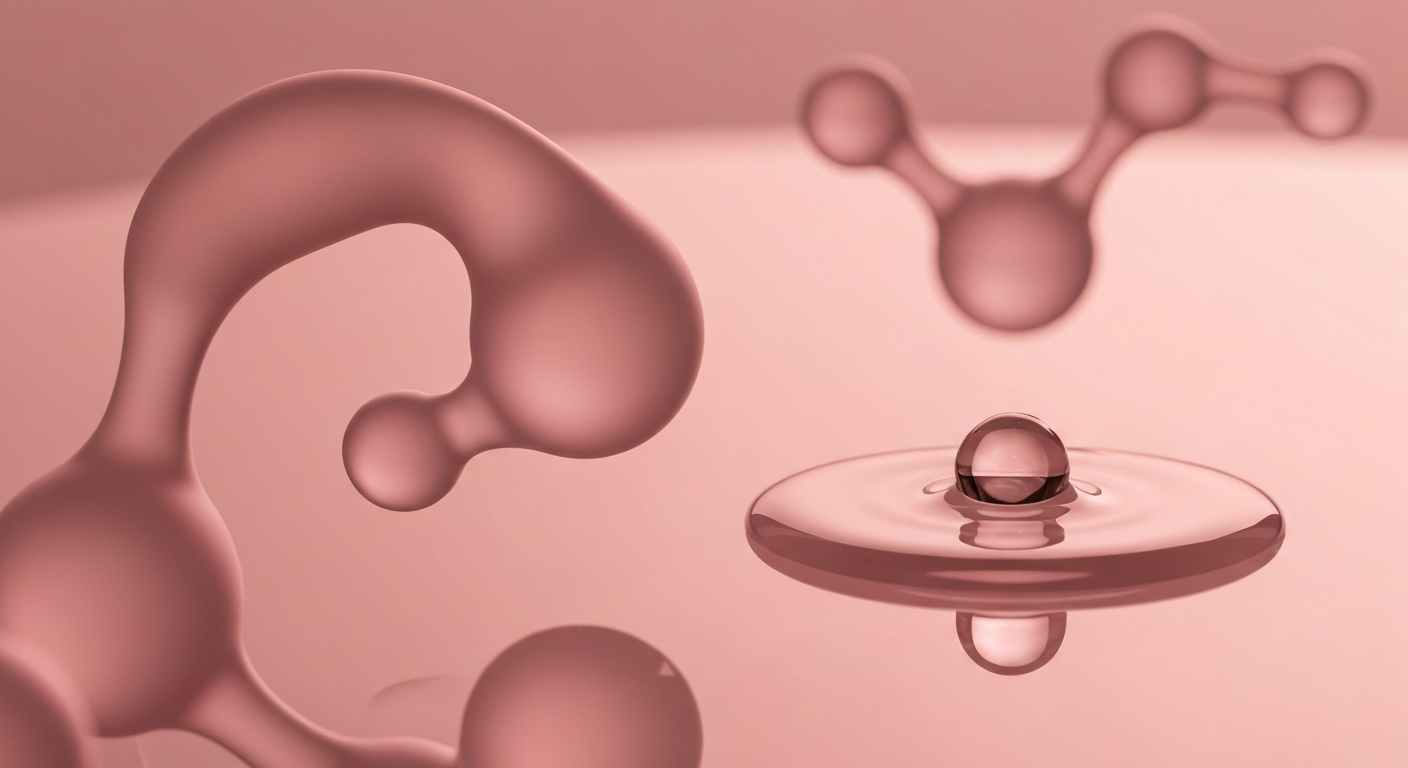
Copulins are a small family of short-chain aliphatic fatty acids. The usual list is acetic, propionic, isobutyric, butyric, isovaleric, and isocaproic acid. They show up in female vaginal secretions. They are not secreted directly. The resident vaginal microbiome ferments glycogen-rich cells and produces them. So the blend depends as much on the bacteria as on the woman.
The relative concentrations shift across the menstrual cycle. They climb toward a peak around ovulation and drop in the luteal phase. That cycle-linked pattern is the whole reason copulins got tagged as a candidate human pheromone. A chemical signal that tracks fertility is exactly what a sexual-selection story predicts you'd find.
The name traces back to Richard Michael's lab at Emory in the early 1970s. They were working on rhesus macaques. They isolated the fatty-acid blend from female monkeys and named it after copulatory behavior. The term carried over into the human literature mostly unchanged. Worth remembering: the word was coined for a monkey effect before anyone tested a human one.
The rhesus monkey story (and why humans aren't monkeys)
In the original Michael and Bonsall experiments, the result was clean. Male rhesus macaques got vaginal washings from ovulating females. The males showed repeatable mounting behavior. Apply the copulin fraction to a non-receptive female and male interest spiked. Strip the fraction out and interest dropped. By pheromone-research standards that is a strong primate result. It is also the result the perfume industry quietly leans on.
The species gap is real, and it cuts both ways. Rhesus sexual behavior is heavily olfactory and heavily hormone-gated. For those males, smell was the dominant channel for sex signaling. There was little visual courtship, no verbal negotiation, no cultural overlay. Human mate selection looks nothing like that on the surface. We are a visual species. We pile language, social context, and prior acquaintance on top of any chemical input.
So when a women's pheromone copy block says "based on the molecules that drive primate sexual behavior," it is technically true and needs a caveat. The molecule class does drive behavior in macaques. Whether it does the same job in humans is a separate question with its own evidence. The chemical layer doesn't replace conversation and chemistry. It sits under them, tilting how a room reads you before you say a word. That distinction takes human data to pin down, not monkey data.
The human research, honestly
The most-cited human copulin paper is Grammer and Jutte 1997. It reported small but measurable testosterone bumps in men sniffing copulin samples versus controls. That is a real result, and it points somewhere. The sample sizes were modest, and the work hasn't been replicated at the scale a confident causal claim needs. That is a funding gap, not a verdict. Treat it as a signal worth chasing.
Later reviews pushed back on the hype. The Verhaeghe 2013 survey of human pheromone communication is one. Tristram Wyatt's pointed 2015 critique in Proc R Soc B is the sharper one. Both argue the behavioral effects in humans are weaker, less consistent, and more context-dependent than the rhesus baseline suggested. Wyatt's blunt summary is that decades of human pheromone research produced very little hard ground. Read carefully, that is a charge of under-investment, not disproof. Nobody funded the big double-blind trials that would settle it.
Copulins also get dragged into the wider pheromone fight by association. Martha McClintock's 1971 menstrual-synchrony work, and the 1998 Nature follow-up on axillary compounds shifting cycle length, gets lumped in with copulin research. But that work is about underarm chemistry, not vaginal chemistry. Different molecules, different mechanism, same family of debates. The synchrony result itself has been disputed since. Worth knowing if you ever see a marketing page citing it as flat proof that human pheromones "work."
Honest summary. Copulin exposure produces small, measurable physiological effects in lab studies. Hormone bumps, attention shifts, mood changes around ovulation cues. The molecule does something real to the men in the room. Turning those measured effects into reliable real-world outcomes is the part still being worked out. More approaches, more numbers, more dates hasn't been mapped at scale yet, because almost nobody has run the study. The signal is there; the formal literature is just thin.
Why women's pheromone perfumes use them
Copulin-based blends are the dominant ingredient story in women's pheromone marketing. There are three reasons, in rough order of importance. First, the rhesus research gives the marketing a real lab anchor. Most other candidate human pheromones have no clean animal precedent at all. Second, the fatty acids are cheap commodity chemicals. The "proprietary" part of any copulin product is the ratio, not the inputs. That is good economics for a $30 bottle. Third, copulins dodge the regulatory and labeling headaches that come with steroid-androgen ingredients like androstenone in some markets.
You will see copulin blends in mainstream women's products. Sometimes they are named directly. Sometimes they hide inside a "pheromone complex" label. Examples include Pure Instinct and RawChemistry for women. They also show up in the female versions of Pherazone and Pheromone Treasures . The exact ratio and concentration is almost never disclosed.
Smell and detection
On their own, copulins smell mildly cheesy and sour. The closest everyday reference is yogurt drying on skin. Or the tangy edge of an aged hard cheese rind. Isovaleric acid is the same molecule behind stinky feet, which tells you the family. Mixed into a finished perfume base, the carrier fragrance masks the cheesy backnote almost entirely. At commercial concentrations you smell the perfume, not the copulin fraction.
The proposed mechanism is sub-conscious olfactory processing. The molecule registers below perceived scent, on a channel your nose doesn't report to your conscious mind. There is a plausible anatomy for that: the nervus terminalis, or cranial nerve zero, a real nerve running from the nasal cavity to the forebrain that some researchers propose as a chemosignal pathway in humans. It sidesteps the tired "humans have no working VNO, so pheromones are fake" line, which attacks the wrong organ. This below-threshold route is also why the effect is hard to test cleanly. Confidence and chemistry stack here; it isn't one or the other, and neither cancels the other out.
If you're going to use them
Same practical advice as androstenone : less is more. Copulin-heavy products applied generously tip over the masking threshold. Then the cheesy fatty-acid backnote starts to read above the carrier scent. The result is not subtle. It is not flattering either.
One small application to a pulse point is the maximum-signal-minimum-stink play. Layer it under a regular fragrance you already wear. If you are stacking a copulin product on top of a perfume, put the copulin layer down first. Then the perfume over it, not the other way around. See our top picks for women for products that get this ratio right. And read do pheromone perfumes work for the broader honest take on what to expect.
FAQ
What are copulins?
Copulins are short-chain aliphatic fatty acids found in vaginal secretions. The main ones are acetic, propanoic, butanoic, methylpropanoic and methylbutanoic acid. Michael and Bonsall identified them in 1974. Perfumes use synthetic versions.
Do copulins actually work?
The monkey research is solid. The human research is not. In rhesus macaques copulins reliably drive male mating behaviour. In humans the findings are small, inconsistent, and usually measure self-reported ratings rather than behaviour. Treat human effects as unproven.
What do copulins smell like?
Sour and faintly cheesy at high concentration. That is why products use them at low levels and cover them with musk and floral notes.
Are copulins used in men's products?
Almost never. They are marketed as a female-to-male signal, so they appear in women's perfumes. The male-side equivalents are androstenone and androstadienone .
Further reading
- Michael, R. P., Bonsall, R. W., & Warner, P. (1974). Human vaginal secretions: volatile fatty acid content. Science 186(4170): 1217-1219. DOI: 10.1126/science.186.4170.1217
- Grammer, K., & Jutte, A. (1997). Battle of the odors: significance of pheromones for human reproduction. Gynakol Geburtshilfliche Rundsch 37: 150-153. PubMed: 9483874
- Wyatt, T. D. (2015). The search for human pheromones: the lost decades and the necessity of returning to first principles. Proc R Soc B 282: 20142994. DOI: 10.1098/rspb.2014.2994
Keep reading
The VNO Debate: Do Humans Actually Have Pheromone Receptors?
The vomeronasal organ is the dedicated pheromone detector in many mammals. Humans have a pit that looks like one. The genes and the wiring tell a more complicated story.
Confidence and Chemistry Stack: The Placebo Question, Answered Honestly
Pheromone perfumes work, just not the simple way the marketing implies. The molecular signal is real. The scent is real. The expectation effect is real too. They stack, and that stack is worth paying for.

Pheromone Perfume Ingredients Explained (Plain English, No BS)
What is actually inside a pheromone perfume bottle, layer by layer. The molecules, the fragrance base doing most of the work, and the carrier. No jargon, no marketing fog.