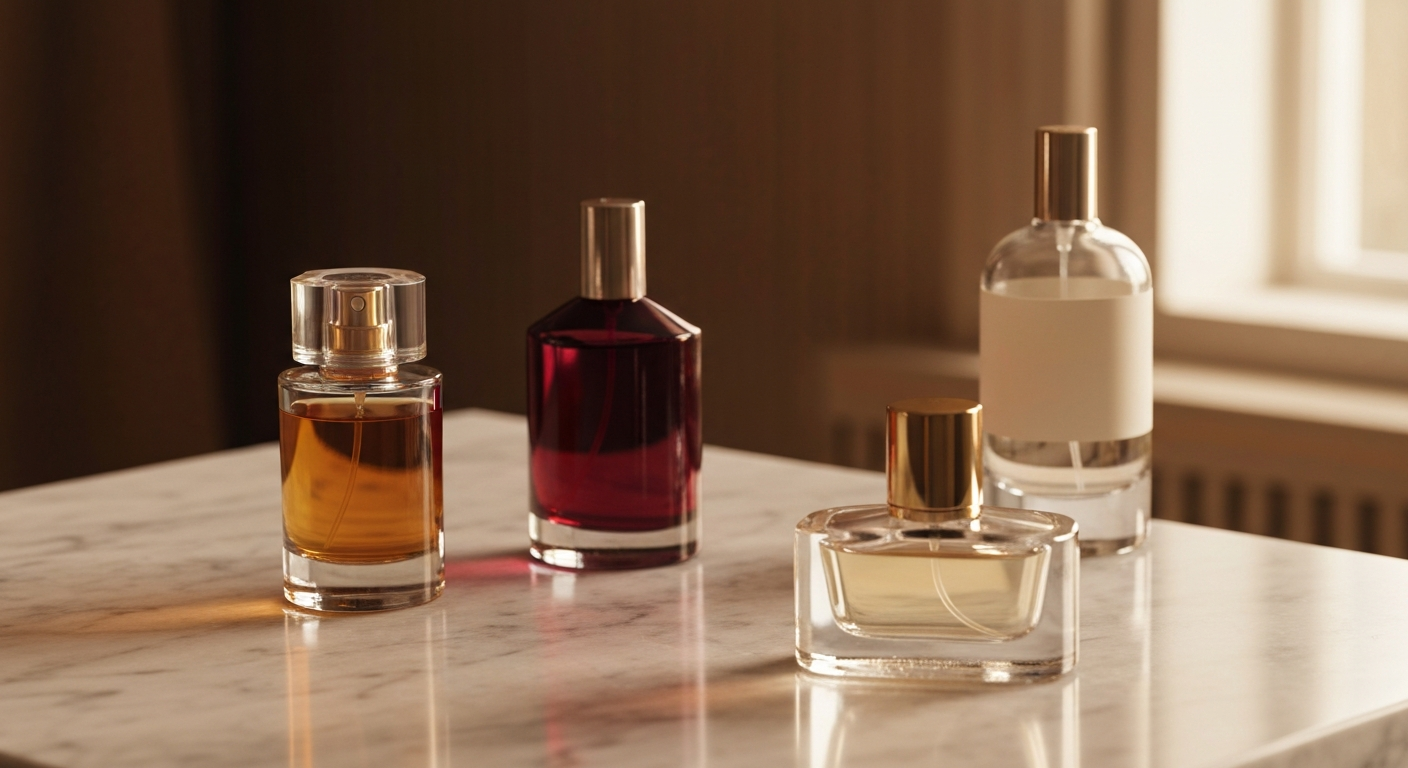
Most layering disasters start the same way. You love your Chanel No 5, or your Tom Ford Lost Cherry, or some indie blend you've worn for years. Then TikTok talks you into a pheromone perfume. On day one you spray everything on the same wrist at once. You walk out smelling like a confused candle. The signature scent goes muddy. The pheromone musk gets buried. Nothing reads right. Layering is a sequence problem, not a quantity problem. Once you get the order, both signals work at once.
Why layering instead of choosing
Your signature perfume is identity. It's what your partner recognizes when you walk in. It's the compliment your coworker gives without knowing why. It's the bottle you keep restocking because nothing else feels like you. Dropping it to test a pheromone blend feels like dressing as a stranger. You shouldn't have to.
Layering exists because the two products do different jobs. The fragrance carries the scent identity, the projection, the mood. The pheromone product carries the synthetic musks and, in some formulas, the copulins . Those molecules are the chemosignal, the part that talks to the person standing close before you say a word. Done right, the perfume is what people consciously notice. The pheromone layer is the warm undertone that makes the whole thing read closer and more skin-like.
Still wondering whether the pheromone half does anything? The honest answer lives in our do pheromone perfumes work breakdown. The short version: the formal studies are thin because the field is under-funded, not because the effect was disproven, and years of field reports point the same way. The scent half always works too. Both signals earn the layering effort.
The base-on-bottom rule
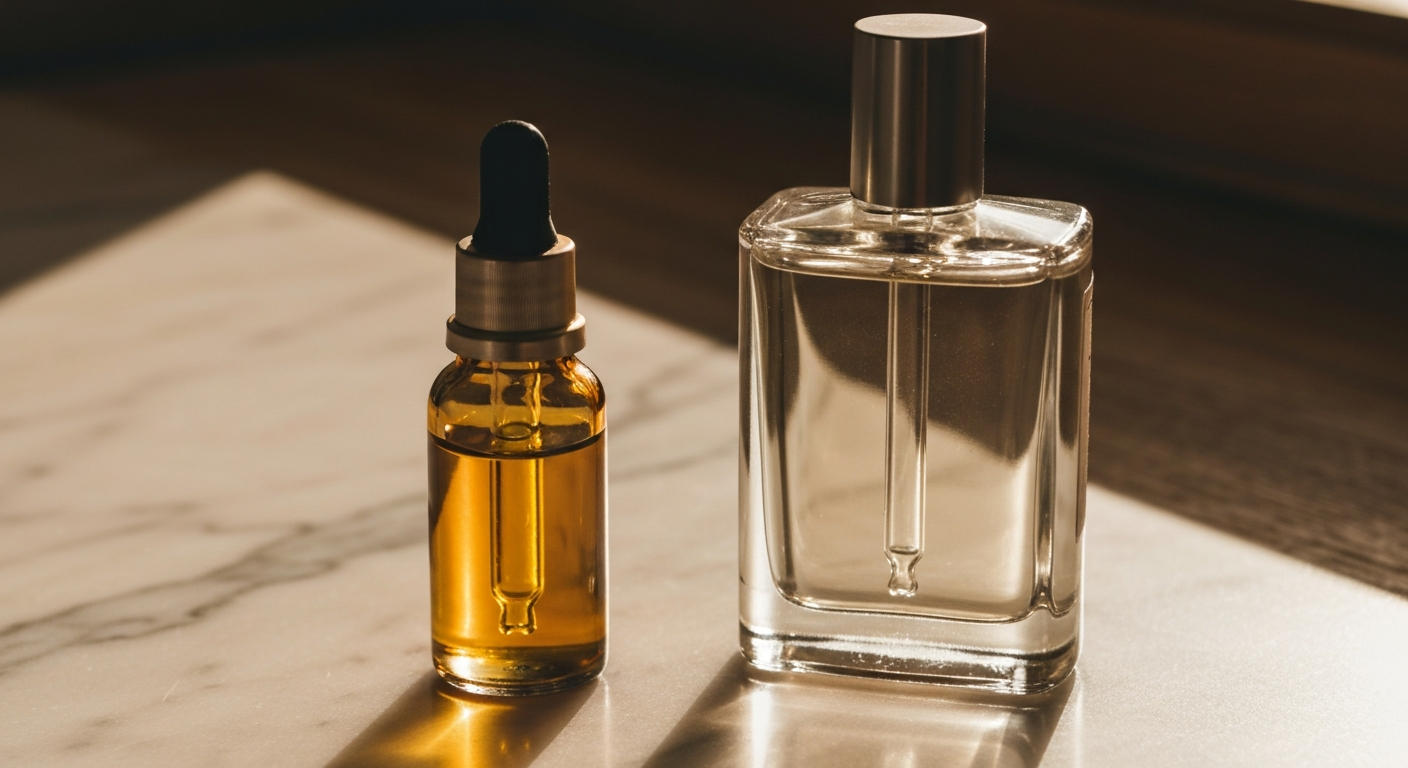
One rule does most of the work. Pheromones go on first. Perfume goes on top. Pheromone oils and unscented vials are built to sit close to the skin and warm up with body heat. They're heavy, slow-evaporating molecules. They act as a base note whether the brand markets them that way or not.
Your designer or niche perfume is a built pyramid. It has its own top, heart, and base notes meant to bloom outward from clean skin. Put the perfume down first, then pat oil over it, and you smear the top notes and trap the heart under a film. Put the pheromone layer down first and let it absorb. The perfume then sprays cleanly over it. The two settle as base under heart under top. That's how perfumery already wants to work.
Step-by-step layering technique
Here's the full sequence, in order, on clean skin. Post-shower, or at least post-rinse. No leftover lotion from yesterday.
- Start with bare, slightly damp skin. Moisture slows evaporation, so damp skin holds fragrance longer.
- Apply one to two dabs of RawChemistry oil , or one dab from your Athena vial , on each pulse point. Inner wrists, the sides of your neck, behind the ears, and the décolletage if you're going low-cut.
- Wait 60 to 90 seconds. The carrier oil needs to absorb so your perfume isn't spraying onto a slick surface.
- Spray your perfume from about 6 inches away. One quick pass per pulse point. The distance matters. Close-range spraying soaks one spot and starves the rest.
- Don't rub your wrists together. This is the most common mistake in fragrance, period. Friction heat crushes the top notes and speeds up evaporation. The perfume you paid for disappears in the first 20 minutes.
- Wait ten full minutes before you leave the house. The alcohol carrier needs to flash off. The pheromone layer underneath needs to warm to your skin temperature. What you smell at minute one is not what anyone else smells at minute fifteen.
Want a more granular breakdown of timing around dates, work, and events? The companion piece on when to apply pheromone perfume covers the why behind each waiting period.
What if my perfume is heavy
Heavy gourmand and oriental perfumes are the hardest layering category. Anything with prominent vanilla, oud, amber, tonka, benzoin, or dense smoky resins is already in the same olfactory neighborhood as a pheromone musk. Stack them and you get a thick, sweet, suffocated effect. Neither product reads cleanly. Tom Ford Lost Cherry, Maison Margiela By the Fireplace, YSL Black Opium, and Mancera Cedrat Boise types all fall here.
Two ways out. First, use less of both. A single dab of pheromone oil on one wrist, then one spray of perfume to the chest. Second, keep the heavy perfume for solo nights. Choose a lighter sister fragrance for layering nights. Most people who love a gourmand also keep a lighter floral or citrus in rotation. It pairs much better.
What if my perfume is light
Light perfumes are the dream layering partner. Clean florals like Chanel Chance Eau Fraîche, Miss Dior Blooming Bouquet, or Marc Jacobs Daisy work well. So do white musks like Glossier You and Clean Reserve Skin. Bright citrus structures fit too, such as Atelier Cologne Orange Sanguine and Chanel Eau de Cologne.
These sit in a different scent register than the warm musk of a pheromone base. Neither has to fight for airtime. The perfume floats on top as the obvious top-note story. The pheromone undertone hums in the background. The overall projection reads closer and more intimate than either product would alone. If you're shopping with layering in mind, favor this category.
Specific pairings that work well
Tested combinations that hold up after the first hour:
- RawChemistry oil + Chanel Chance Eau Fraîche. A light fresh layer. The pheromone musk softens the citrus edge of the Chanel without dragging it into something dense. The overall projection feels warmer and skin-close.
- RawChemistry oil + Le Labo Santal 33. A warm woody layer. Santal 33 is already a near-skin scent, and the pheromone base extends that quality. People standing close get the cardamom-sandalwood signature. The oil keeps the dry-down from going thin.
- Athena 10:13 + your signature perfume of choice. Athena is the most research-anchored option on the shelf. The formula traces back to Cutler's 1986 axillary work. Because it's unscented, you can pair it with anything you already own without scent conflict. It's the safest first layering experiment if you don't want to commit to a new fragrance identity.
Haven't picked your pheromone product yet? The full ranked list lives at best pheromone perfumes for women . The oil-specific shortlist is at best pheromone oils . For the unscented route specifically, unscented pheromone perfume walks through why that category exists and who it suits.
Common layering mistakes
Two errors ruin almost every first attempt:
- Layering a scented pheromone perfume under your designer perfume. If your pheromone product is already a finished fragrance, you now have two perfumes fighting on the same pulse point. A Pure Instinct roll-on, a Pheromone Treasures blend, anything with a named scent profile counts. Use scented pheromone perfumes solo. Or only layer them with unscented or very simple companion scents. Save the stacked perfume + pheromone routine for unscented products like Athena, or near-unscented oils like RawChemistry.
- Over-applying both. The instinct says more equals a stronger signal. The reality is different. Anything past two pulse points of oil plus three sprays of perfume turns into a sillage cloud. A sillage cloud reads as someone trying too hard. The goal is intimate range, not elevator-clearing range.
Layering for specific occasions
Same products, dialed up or down depending on where you're going.
Work daytime
One dab of pheromone oil at the base of the throat only. One spray of perfume on the chest. You want the people who hug you to notice. You don't want the people in the next cubicle to. The lighter touch also lets you reapply mid-day without going overboard.
Date night
Full pulse-point routine: wrists, neck, behind ears, décolletage. Layer with intent. Allow the full ten-minute settle window before you leave. Add a few extra minutes if you're driving. Car heat reactivates everything, and you don't want to arrive smelling like you just sprayed in the parking lot.
Long events
Weddings, conferences, six-hour dinners. Apply the full layered routine in the morning. Then carry a travel atomizer of just the perfume, not the pheromone, for a mid-event touch-up. The pheromone base stays put all day on its own. The perfume top notes are what fade and need refreshing. For the exact longevity math, how long does pheromone perfume last breaks down the timing window.
FAQ
Can I layer two different pheromone products together?
You can, but there's no payoff. Most products contain overlapping musk molecules. Stacking them doesn't double the effect. It just doubles the cost. Pick one and pair it with a fragrance instead.
Does scented lotion count as a layer?
Yes. If you're using a scented body lotion, treat it as part of the base layer. Pick a perfume that complements it. Don't add a pheromone oil on top of a strong scented lotion and then a perfume on top of that. Three scented products is one too many.
What if I hate the smell of the pheromone product on its own?
Switch to an unscented format. Athena 10:13 is the obvious pick because there's almost no scent of its own to mask. RawChemistry oil has a faint clean musk. If even that bothers you, the unscented options are your friend.
Should I layer differently in summer vs winter?
Yes. Heat amplifies everything, so summer applications should be lighter. One pulse point instead of four, one perfume spray instead of three. In winter you can apply more. Cold air mutes projection, and dry skin holds less fragrance. Same products, half the dose in July, full dose in January.
No comments yet