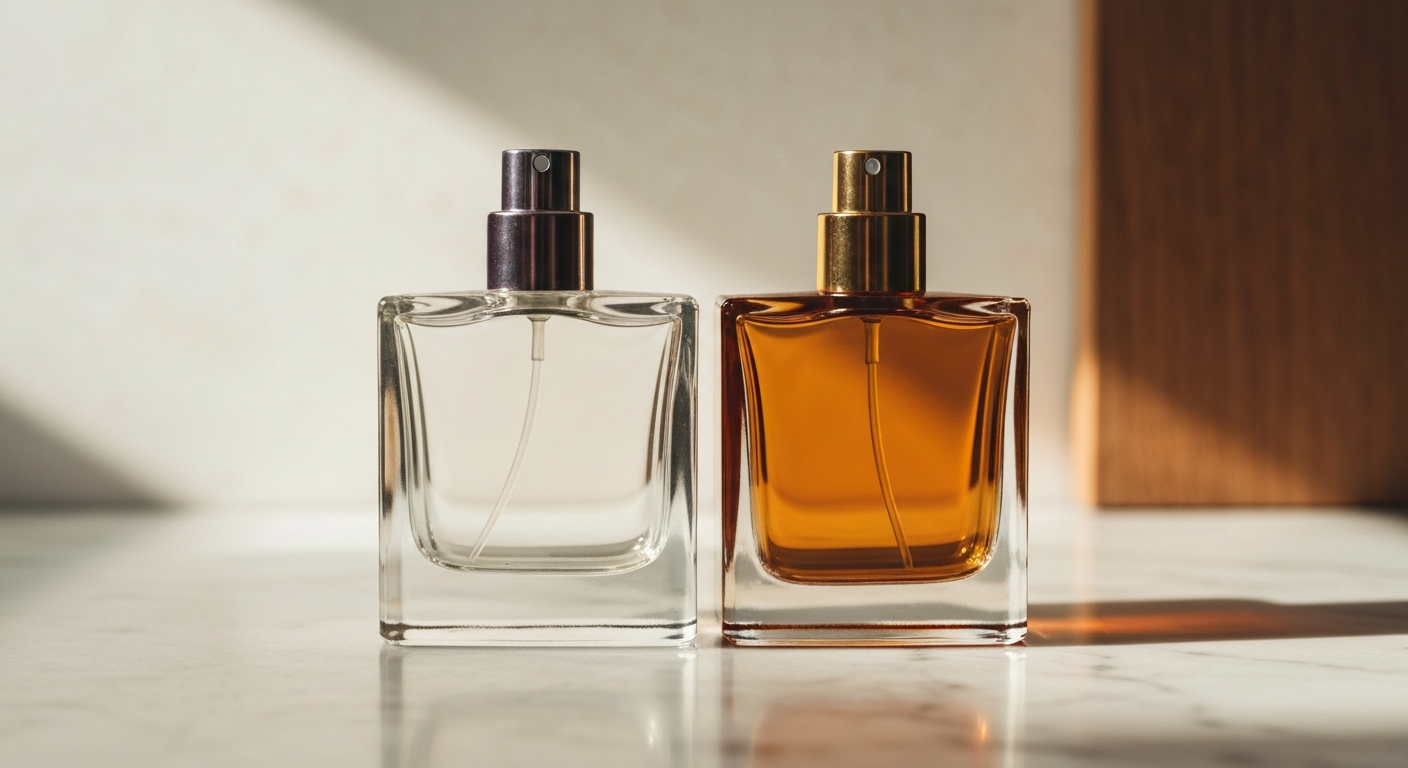
Walk into Sephora and you can smell the gap in thirty seconds. A $40 designer flanker and a $300 niche bottle are not the same animal. Walk into the pheromone aisle online and that distinction vanishes. Every product is sold as a magic bullet. Almost none of them tell you the boring truth. A pheromone cologne is a regular cologne with a small dose of pheromone molecules added. That's the whole trick. The question worth asking is which of those molecules are dosed to actually do their job. The second question is whether the scent you're paying for is any good.
The headline difference
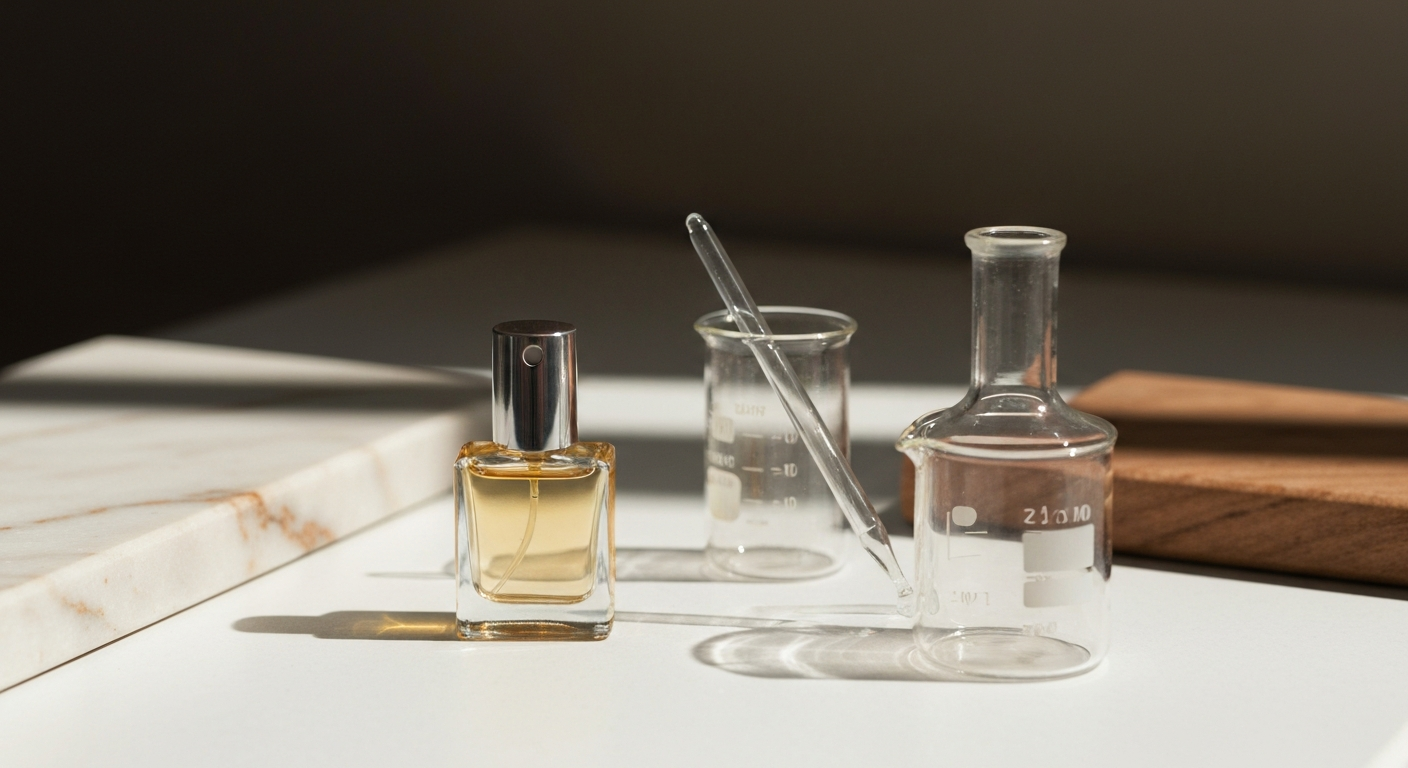
A regular cologne is a fragrance composition. Aromachemicals and essential oils sit dissolved in alcohol. They unfold over a few hours in a top, heart, and base structure. A pheromone cologne is the same thing with one extra step. The lab adds a small percentage of pheromone molecules to the same alcohol base. The usual suspects are androstenone , androstadienone, androstenol, or copulins. Concentrations are tiny, usually fractions of a percent. That's the right range for a chemosignal, but only if the dose is honest. Some products underdose to the point of doing nothing.
That's it. There's no separate manufacturing path. No special carrier, no exotic technology. The added molecules are commercially available steroids and acids. Any flavor-and-fragrance house can order them by the kilo. So the premium you pay over a comparable scent is mostly margin and marketing. The actual materials cost for the added compounds is small. A real dose is cheap to include, so there's no excuse for a bottle that skips it.
What's actually in a regular cologne
Open any modern designer or niche fragrance and you'll find the same toolkit. Roughly eighty percent is denatured ethanol. That's the carrier that flashes off and lifts the aromatic molecules into your nose. The rest is the fragrance compound itself. It runs from about 5% for an eau de toilette to 30% for a parfum. That compound is a blend of naturals and synthetics, regulated by IFRA, the industry body that caps potential allergens.
The structure is the famous pyramid. Top notes are the small volatile molecules that hit first. Think citruses, aldehydes, light florals. They burn off inside fifteen minutes. Heart notes carry the body of the scent for an hour or two, usually florals, spices, and fruity accords. Base notes are the heavy stuff that clings to skin for hours: woods, ambers, resins, and musks.
Here's the twist that complicates the whole pheromone conversation. The base of almost every modern cologne contains synthetic musks and skin-scent molecules. They smell like clean human warmth. Iso E Super is the most famous example. It's a velvety woody-skin molecule used in everything from Molecule 01 to half the Tom Ford lineup. Synthetic musks like galaxolide and habanolide go into nearly every base accord. They give that just-out-of-the-shower clean-skin halo. These compounds aren't pheromones. But they hijack the same perception of human warmth. That's part of why a well-built regular cologne already pushes some of the same buttons a pheromone brand aims for. The difference is that a real pheromone works on a channel scent alone can't reach.
What's added in a pheromone cologne
The molecules pheromone brands lean on are a short list. Most for-men formulas contain one or more of these.
- Androstenone. The most commonly named molecule. It's a steroid metabolite tied to dominance and assertiveness. On its own it smells sharp and urinous. It's heavily diluted in finished products, which is exactly how you want it.
- Androstadienone. The molecule with the most lab research behind it. Saxton et al. 2008 found a small effect on women's attractiveness ratings of men at speed-dating events. Hare et al. 2017 didn't replicate it. Two studies, one signal, one null. That's a thin, under-funded literature, not a verdict against the molecule.
- Androstenol. Softer, tied to approachability and social ease. Found in fresh male sweat. Little isolated-molecule research yet, which says more about funding than about the molecule.
- Copulins. Fatty acids found in vaginal secretions. Used in some for-women products and a few unisex blends. Studied mostly in non-human primates so far.
All of these get dropped into a fragrance base at low concentrations. Whether a given bottle doses them to reach effective levels on skin is the part worth checking. Wyatt 2015 is the careful voice in this field. His point is precise: no single human pheromone has been chemically isolated and proven under a strict biological definition. That's a gap in the formal proof, not a demonstration that the molecules do nothing. Human chemosignal studies are rare and expensive, so the literature is thin because the work hasn't been done, not because it came back empty. The gap that actually matters is between honest formulation and marketing hype.
Cost and concentration comparison
A pheromone cologne usually retails between $30 and $80 for a full bottle. A designer cologne sits in the $50 to $150 range. Niche bottles climb from $150 to $400. The pheromone price point lands in the impulse-buy zone on purpose.
What you give up at that price is fragrance complexity. Designer houses spend serious money on perfumers, raw materials, and reformulation cycles. A Tom Ford or a Maison Margiela Replica is the output of an industry that's been refining its craft for a century. Most pheromone brands aren't paying for that level of nose talent. Their budget goes to the added molecules, the marketing copy, and the affiliate program. The base scent is usually a simple, generic accord. A fresh aquatic, a clean amber, a sweet vanilla. It's built to be inoffensive, not memorable.
Concentration also tends to be lower. Many pheromone colognes sell as oils or roll-ons in 10ml bottles. That projects less and lasts shorter than a 50ml or 100ml EDP. You're paying for the molecule layer, not the volume of fragrance compound on your skin. That trade only pays off if the molecules are dosed to work.
Scent quality comparison
Here's the honest take after going through both shelves bottle by bottle. Most pheromone colognes have less sophisticated scent profiles than designer alternatives at the same or slightly higher price. That's not a moral judgment. It's how the math works out. If a brand buys the pheromone molecules first and treats the scent as the carrier, the scent gets the smaller budget.
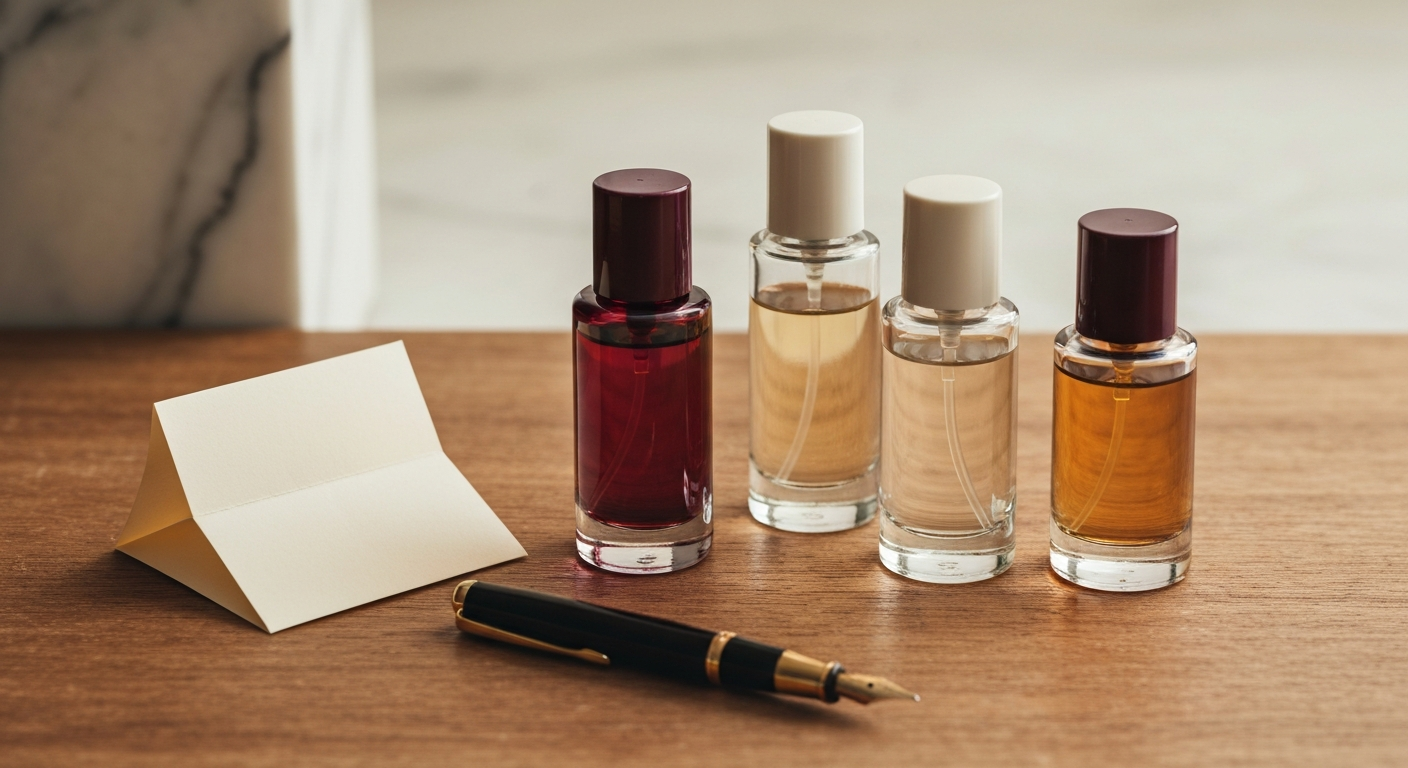
Pure Instinct is a pleasant generic fruity-amber. RawChemistry leans into a sweet musky cocktail. Nexus Pheromones is a clean aquatic. None of them will get stopped at a counter the way a well-built niche fragrance does. They're all fine. They're just not refined. You buy them for what's dosed into them, not for the accord.
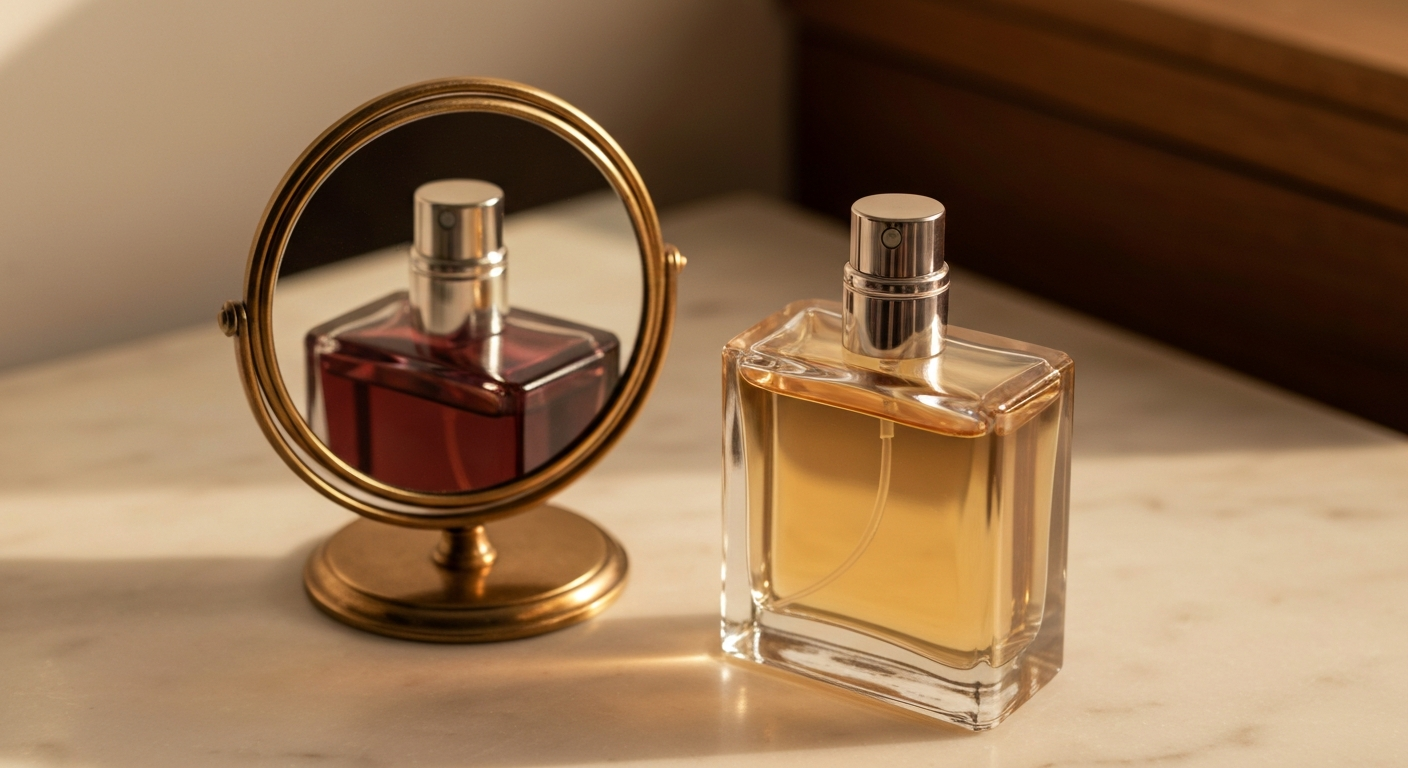
Say scent is your main criterion. You want compliments on what you smell like, not on the molecular signal underneath. Then a designer or niche fragrance at the same price wins on craft every time. A bottle of Bleu de Chanel, Sauvage EDP, or any of the Maison Margiela Replica lineup will out-smell a pheromone cologne on pure aesthetic terms.
Effect comparison
Both categories affect attraction. The mechanism is different. The magnitude is different too.
A regular cologne works through three channels that are well documented. First, the scent reads as pleasant or unpleasant and creates a sensory anchor. Second, the wearer's confidence shifts when they like how they smell. That confidence shows up in posture, voice, and behavior. Third, the synthetic musks and skin-scent molecules in the base do their own work. Iso E Super, galaxolide, ambroxan, the whole skin-musk family chemically mimic clean human warmth. They trigger the same warmth-perception circuits any close-range body cue would. That's a real effect. It's just not a chemosignal in the strict sense.
A pheromone cologne adds a fourth channel on top: the chemosignal itself. Humans read airborne body signals through more than one door, and one candidate is the terminal nerve, a real cranial nerve some researchers propose as a pathway from the nose to the brain. When the molecules are dosed right, you get a real bump over everything a regular cologne already does. Confidence and chemistry stack here. It isn't one or the other. Do pheromone perfumes work goes deeper on the evidence question. The short version: the effect is real, usually subtle, and the formal studies are thin because the field is under-funded, not because the signal isn't there.
Which one to buy when
The decision splits cleanly along what you actually want.
Buy a regular cologne if scent is the priority
You want compliments on the fragrance. You care about projection and longevity. You want a signature smell that holds up next to a bartender's nose at three in the morning. Any well-reviewed designer or niche bottle at your price point beats a pheromone cologne on that brief. Remember, the synthetic musks already in the base are doing some of the warmth work on their own. You just won't get the chemosignal layer.
Buy a pheromone cologne if you want the molecule signal
Go this way if you don't mind a simpler base. The best pheromone cologne options sit in the $30-$60 range. You get a serviceable scent with the added compounds dosed in. The sillage will be less complex. But you also get the molecular layer, which is the whole reason to be here. The best pheromone perfumes for men pillar walks through specific picks by use case.
Buy both and layer them if you want the full stack
This is the move RawChemistry and most oil-based pheromone brands are quietly built around. Apply the pheromone oil or roll-on to pulse points first: wrists, neck, behind the ears. Let it dry for thirty seconds. Then spray your regular cologne over it. The pheromone product sits on the skin as a scent-light base. The designer fragrance handles projection. You get the molecules and the craft scent in one outfit. The pheromone perfumes buying guide covers the layering protocol in more detail.
FAQ
Can I just add pheromones to my regular cologne?
You can layer them on the same skin, yes. Don't mix them inside the bottle. Pheromone oils use different solvent systems. They'll cloud or destabilize a finished fragrance. Apply the pheromone product first, let it set, then spray cologne on top.
Do pheromone colognes have a strong smell of their own?
Most do. The marketing sometimes implies the added molecules are odorless and a separate fragrance is layered for looks. In practice, the carrier fragrance is the dominant smell. The added pheromones sit below most people's conscious detection threshold at the dosage used. You'll smell the cologne, not the molecules. Below the threshold isn't the same as inactive: that's the whole point of a chemosignal.
Is a pheromone cologne worth it over a designer cologne at the same price?
On scent craft alone, no. On the added molecular signal, that's the reason to reach for one. The honest framing is that you're paying for a chemosignal layer a regular cologne can't give you, on top of a simpler scent. If you want that layer and you're fine with a plainer base, buy it. If a beautiful fragrance matters more to you than the signal, spend the same money on a designer bottle you genuinely love. Or layer both and stop choosing.
Do regular colognes contain pheromones already?
Not the marketed ones. Designer and niche houses don't add androstenone or androstadienone to their formulas. They do include synthetic skin-musks and warmth-mimicking molecules like Iso E Super, ambroxan, and galaxolide. Those trigger overlapping perception circuits. Functionally close, chemically different. They mimic warmth, but they aren't a chemosignal.
Which lasts longer on skin?
Designer and niche colognes almost always outlast pheromone colognes. They carry higher fragrance concentration, more base notes, and more anchoring molecules. A good EDP can hold for eight to twelve hours. A pheromone oil tends to fade in three to five. That's another reason layering is the popular workaround.
We may earn a commission if you buy through links in this article. It doesn't change which products we recommend.
No comments yet