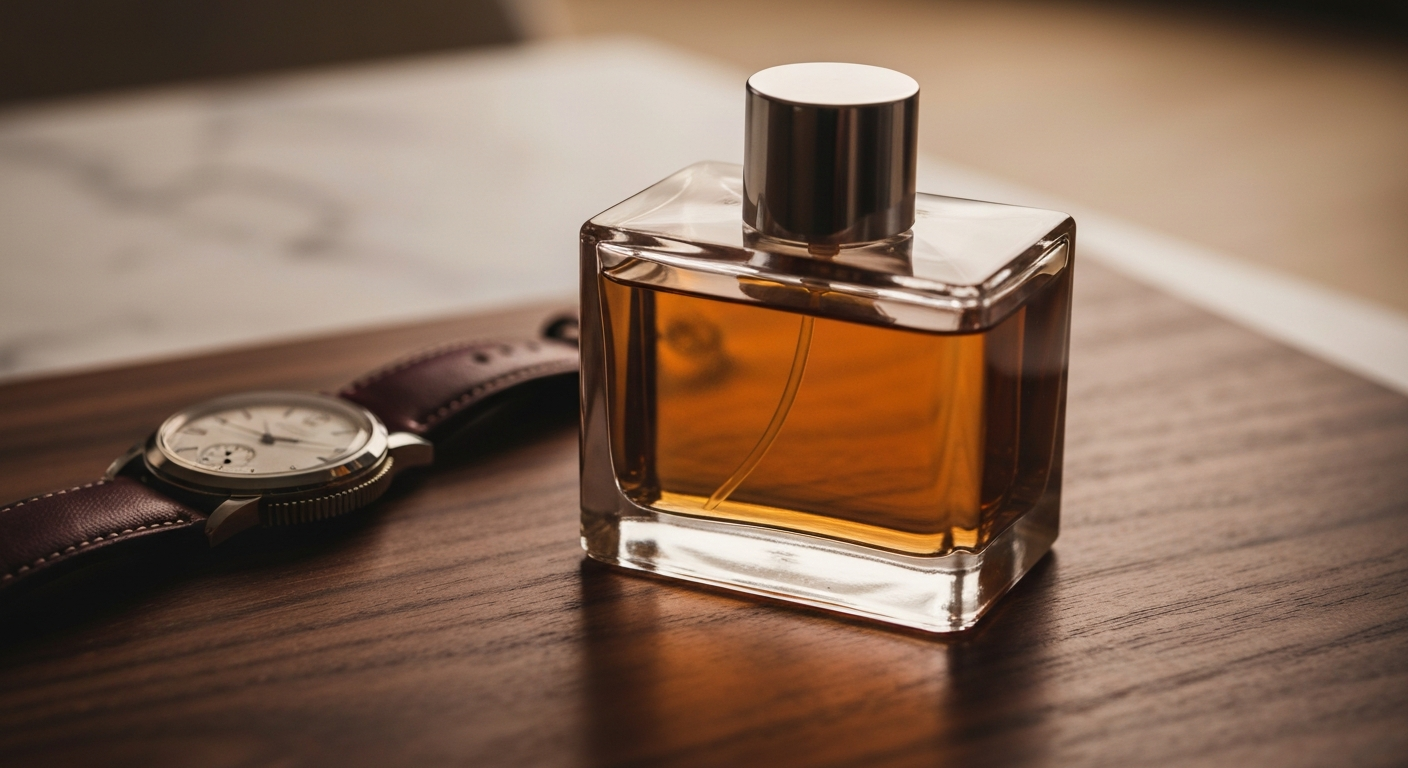
Most articles on this give you one number and stop. The honest answer has three clocks running at once. And the one most buyers care about, the pheromone effect itself, is usually the shortest of the three.
The short answer
Three numbers to keep straight:
- Scent on skin: 4 to 8 hours for most pheromone colognes. Amber or oud-heavy bases sometimes run longer.
- Scent on fabric: 24 to 72 hours. Occasionally a week on unwashed wool or denim.
- The pheromone molecules themselves, if the product contains active ones: roughly 30 minutes to a few hours. It depends on the molecule and how concentrated it is.
Those three things are not the same thing. You can smell the cologne for six hours and still have lost the active window an hour in. That is why this question matters more than it looks.
Scent longevity on skin
The fragrance part behaves like any other fragrance. Most colognes in this category sit in the eau de toilette range, 5 to 15 percent aromatic oils. That puts wear time in the 4 to 8 hour window on average skin. A few oil-based picks run longer, like Pure Instinct . Oil carriers evaporate more slowly than alcohol.
Three variables move that number around more than people realize.
Skin type
Oily skin holds fragrance noticeably longer. The sebum gives top and heart notes something to bind to as the alcohol flashes off. Dry skin burns through a spray fast, sometimes under three hours in winter. A pre-spray of unscented lotion is the standard trick. It genuinely works.
Weather and body heat
Heat and humidity push molecules into the air faster. A cologne that lasts seven hours in a 65 degree office can be gone in three on a humid August evening. Cold, dry air slows the same evaporation down. This is one reason pulse-point application gets recommended. Warm skin volatilizes the molecules at a steadier rate than a cool forearm. More on that below.
The fragrance family of the base scent
Citrus and aquatic notes are short-lived. They sometimes vanish in two hours. Woody, amber, oud, vanilla, and musky bases hold for the full 8 hours. They also leave the longest skin residue. If a cologne markets itself as light and clean, expect a shorter wear life. If it skews amber or musk, expect the upper end.
Scent longevity on clothes
Clothes are a different story. Fabric has no body heat driving evaporation and no biology breaking the molecules down. So the scent just sits there. On cotton, expect 24 to 48 hours. On wool, denim, or anything with structure, 48 to 72 hours and sometimes longer. The collar of a jacket you wore last week can still throw the cologne when you put it on again.
That linger is mostly a feature. You walk into a second-day situation already wearing a scent trail. The downsides are real, though. Musks and ouds build up on garments you wear often. And over-applied androstenone on a jacket lining can turn sour the second time body heat warms it.
Washing behavior is straightforward. A normal cold or warm cycle with detergent removes most of any fragrance. That includes the pheromone-active molecules. A single rinse with no detergent does not. If a shirt still smells faintly of last week's cologne after one wash, the original application was too heavy. The formula is not unusually persistent.
Pheromone molecule longevity (the part nobody talks about)
Here is the piece left out of nearly every other article. The scent you smell and the pheromone molecule are two different clocks. The molecules in these formulas have their own volatility rates. Those rates usually run shorter than the fragrance carrying them.
A rough hierarchy follows. One note first: the human-pheromone literature is thin because the field is under-funded, not because it was disproven. Wyatt 2015 is the careful survey of where the science actually stands, and it reads as promising and unfinished.
- Androstenone is the most persistent of the common additives. It is related to compounds the body makes naturally. It clings to skin and fabric for hours. This is also why over-application punishes you most with this molecule, covered below.
- Androstadienone is more volatile and dissipates faster, often within an hour or two. The Saxton 2008 speed-dating work and Hare 2017, a failed replication, bracket what is known about its effect window. Most lab protocols dose it fresh for this reason.
- Copulins, the female-marketed acid blend, are quite volatile. Skin lipids absorb them quickly. The effective window is typically the shortest of the group, often under an hour.
The practical upshot is simple. Say you applied a pheromone cologne at noon and can still smell it at 6pm. That does not mean the active molecules are still working on the people around you. The chemosignal is real, but it fades on its own clock, and the fragrance outlives it in most cases. This is one reason reapplication helps more than buyers assume.
How to extend each
Different clocks, different tactics.
For the scent
Moisturize first. Spray on pulse points, the wrists, neck, and behind the ears. Let it dry without rubbing. Two light sprays from 6 to 8 inches almost always beat one heavy blast at point-blank range. Held at distance, the alcohol can bloom rather than puddle.
For the pheromone effect
Reapply midway through long events. A four-hour dinner is fine on a single dose. A 6pm-to-1am night out benefits from a discreet top-up around 9 or 10. Apply to pulse points specifically, the wrists, base of throat, and behind the ears. Body heat re-volatilizes the molecules at a usable rate there. The collarbone is a quietly good spot at conversation distance.
For the molecules without the fragrance baggage
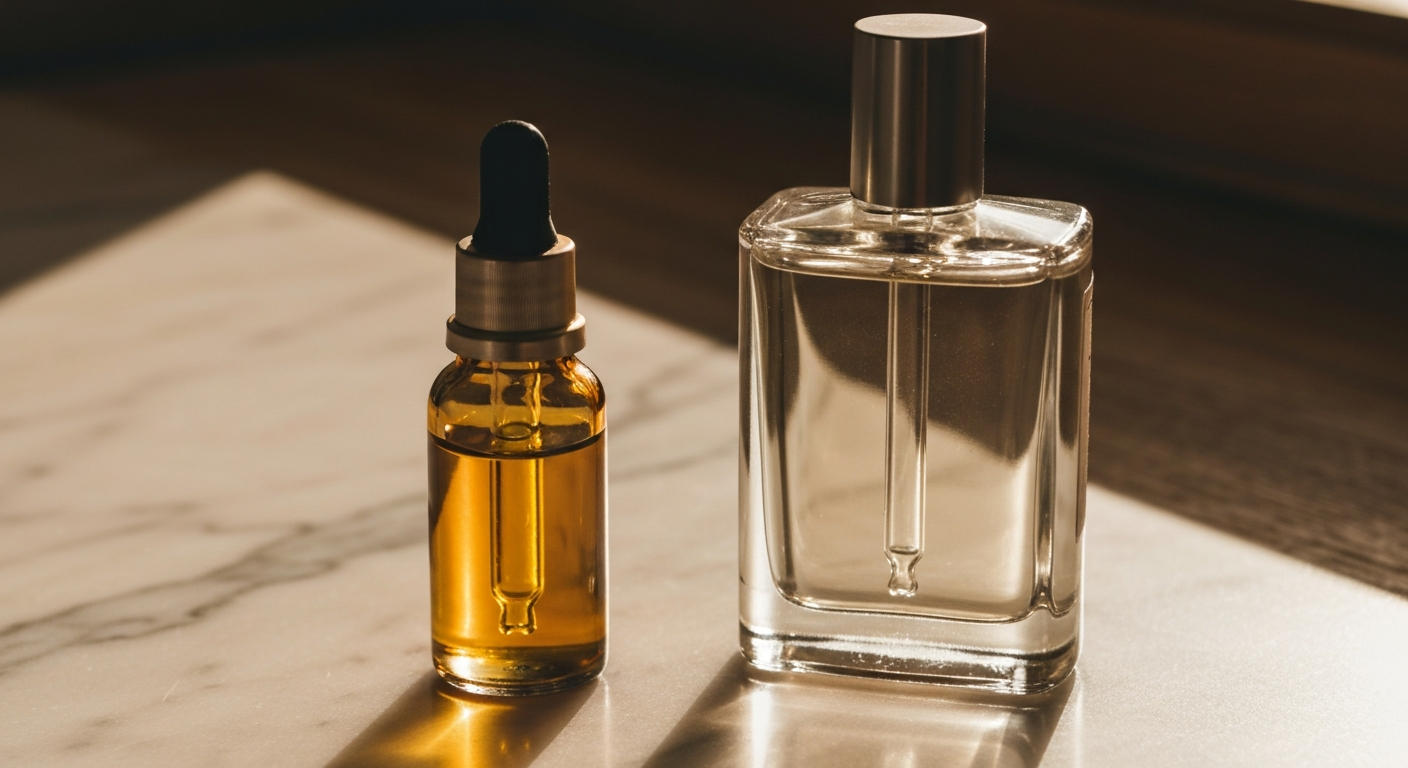
Unscented pheromone oils exist precisely for this. They let you layer with your own signature fragrance. You can reapply the active component without doubling the scent. This pairs with the strategy in our layering pheromone cologne with fragrance guide. Brands like RawChemistry sell unscented and scented versions side by side for this reason.
When 'lasting longer' is bad
Over-application is the most common mistake in this category. It is worse with pheromone formulas than with regular cologne. Androstenone has a non-linear smell profile. A trace is musky and warm. A heavy dose reads stale, sour, or faintly urinous to the person next to you. More is not stronger. More is worse.
Two practical rules. First, two sprays maximum on a first application. If you are unsure, one. Second, never reapply by stacking on skin you already sprayed. Top up on a fresh pulse point, or wait until after a shower. The goal is a clean dose that lasts a few hours. Not a saturated cloud that lasts the night.
Want a deeper rundown of which products keep this balance right? The best pheromone cologne roundup goes into per-bottle wear notes. The best pheromone perfumes for men page covers the men-specific picks. And the companion piece on when to apply pheromone cologne covers timing strategy in more detail.
FAQ
Does pheromone cologne last longer than regular cologne?
No. The scent component behaves like any other eau de toilette. And the pheromone molecules themselves usually fade faster than the fragrance does. Concentration and base notes drive longevity, not the pheromone label.
Can I shower and still have the pheromone effect?
Soap and water remove most of the active molecules. If you shower, reapply afterward. The scent lingering on yesterday's shirt is fragrance residue, not an active dose.
Does an old bottle still work?
Stored away from heat and light, sealed bottles hold for two to three years. Once opened, expect about a year of peak performance. Oxidized fragrance smells flat, and the pheromone fraction degrades along with it. If the scent has shifted noticeably, the active portion has shifted too.
No comments yet